

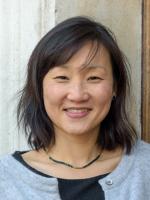
University Assistant Professor
"Life is nothing but an electron looking for a place to rest"
- Albert Szent-Györgyi (Nobel Laureate in Physiology 1937)
Current research
My team's goal is to develop smart bio-hybrid approaches that can help to probe or re-wire the bioenergetics of living systems. These can serve as platforms to launch new biotechnologies to address a range of societal needs, including for renewable energy generation, carbon recycling, precision farming, environmental sensing, and treating pathogenic biofilms. Currently, we are focused on understanding and re-wiring photosynthesis towards sustainable energy conversion. We work at the intersection of many disciplines, including physics, synthetic biology, chemical biology, engineering and material science; but at the heart of our work is electrochemistry.
Please see our website for more info: https://www.ch.cam.ac.uk/group/zhang
Jenny completed her PhD in bioinorganic chemistry at the University of Sydney, Australia, with a brief stint at the Hebrew University of Jerusalem. During this time, she developed redox active platinum-based anti-cancer agents and studied their biodistribtion and metabolism within tumour models. Following this, she was awarded a Marie Curie Incoming International Fellowship at the University of Cambridge to explore how biocatalysts can be exploited to generate solar fuels. In particular, she worked on developing strategies to re-wire complex enzymes, such as the water-oxidation enzyme photosystem II, to electrodes/semiconductors/other proteins in an emerging field known as 'semi-artificial photosynthesis'. She has since been awarded a BBSRC David Phillips Fellowship, followed by appointment to Assistant Professor in Materials Chemistry at the Yusuf Hamied Department of Chemistry. She will become Professor in Bioenergetics and Materials Chemistry in October 2026, where she then heads the BEAM Team. Presently, her team takes on re-wiring biology to another level of complexity - in living cells!
Jenny was awarded the RSC Felix Franks Biotechnology Medal in 2022 and the L'Oreal UNESCO Sustainable Development award for Women in Science in 2023. She was recently awarded the Outstanding Supervisor Award by her department, and the Luigi Galvani Prize by the International Bioelectrochemical Society in 2026.
Dr Zhang discusses her research
Publications
- ‹ previous
- Page 5
